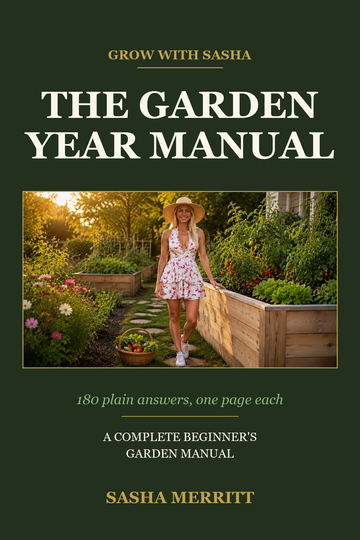
Gardening is not a gift. It is a handful of things plants need, and a longer list of signs they give you when one of them is missing. This is that list written down: one hundred and eighty entries on light, soil, the growing year, the plants themselves, and what a sick leaf is actually telling you. One page each. Why it matters, then exactly what to do.
Or the manual on its own for $37.
“A dead plant is not a verdict on you. It is a sentence in a language you can learn.”
A whole chapter is about building the garden so you are not kneeling on the ground.
$47 for both · PDF · read on any device · 7-day refund
None of them are about talent, and none of them are visible while you are making them. That is the whole problem: the mistake happens in April and the garden tells you about it in July, by which point it looks like bad luck.
The green ink in the margin is which chapter answers each one. This page prints no figure for what you will save on groceries, because that depends on your yard, your season and your prices, and a page that promises you a number has told you something it cannot know.
$47. Once. The season comes back every year.
See both options$47 once · emailed instantly · PDF · manual only $37
| The bed goes in the tidiest spotNot the sunniest one | Costs the whole season | Reading your own yard before you build anythingChapter 1 · 15 entries |
| A little water, every single dayThe most common habit there is | Shallow roots, gone in one hot week | Deep and less often, and the finger testChapters 2 & 6 |
| Planting out on the warm week in AprilAverage last frost is an average | One cold night takes the lot | Counting back from your own frost datesChapter 4 · 15 entries |
| Crowding, because seedlings look smallPacket spacing feels absurd in May | Mildew and a smaller harvest | Spacing, airflow and what to sow in the gapsChapter 5 · 15 entries |
| A yellow leaf read as bad luckIt is a specific message | The same loss again next year | Fifteen signs and what each one meansChapter 11 · 15 entries |
| Kneeling on the ground for an hourEvery guide assumes you can | Quitting by June, and blaming yourself | Building the garden to fit your bodyChapter 3 · 15 entries |
Twelve chapters, aimed at every line on that page.
Growing advice is regional. Frost dates, hardiness zones and season
length change what works in your yard, and the book says so on the pages where it matters
and sends you to your own state extension service for local timings.
Nothing here is a promise about your harvest. It is the list of what to do and why.
Every entry is built the same way and takes one page. Why it matters, in plain words. Then exactly what to do about it, with real numbers. Then one line worth remembering. And a photograph, because a description of what a bolting lettuce looks like is worth far less than a picture of one.
You do not read it in order. Most people open it in March, do the three things on that page, and shut it again until April. That is the correct way to use it.
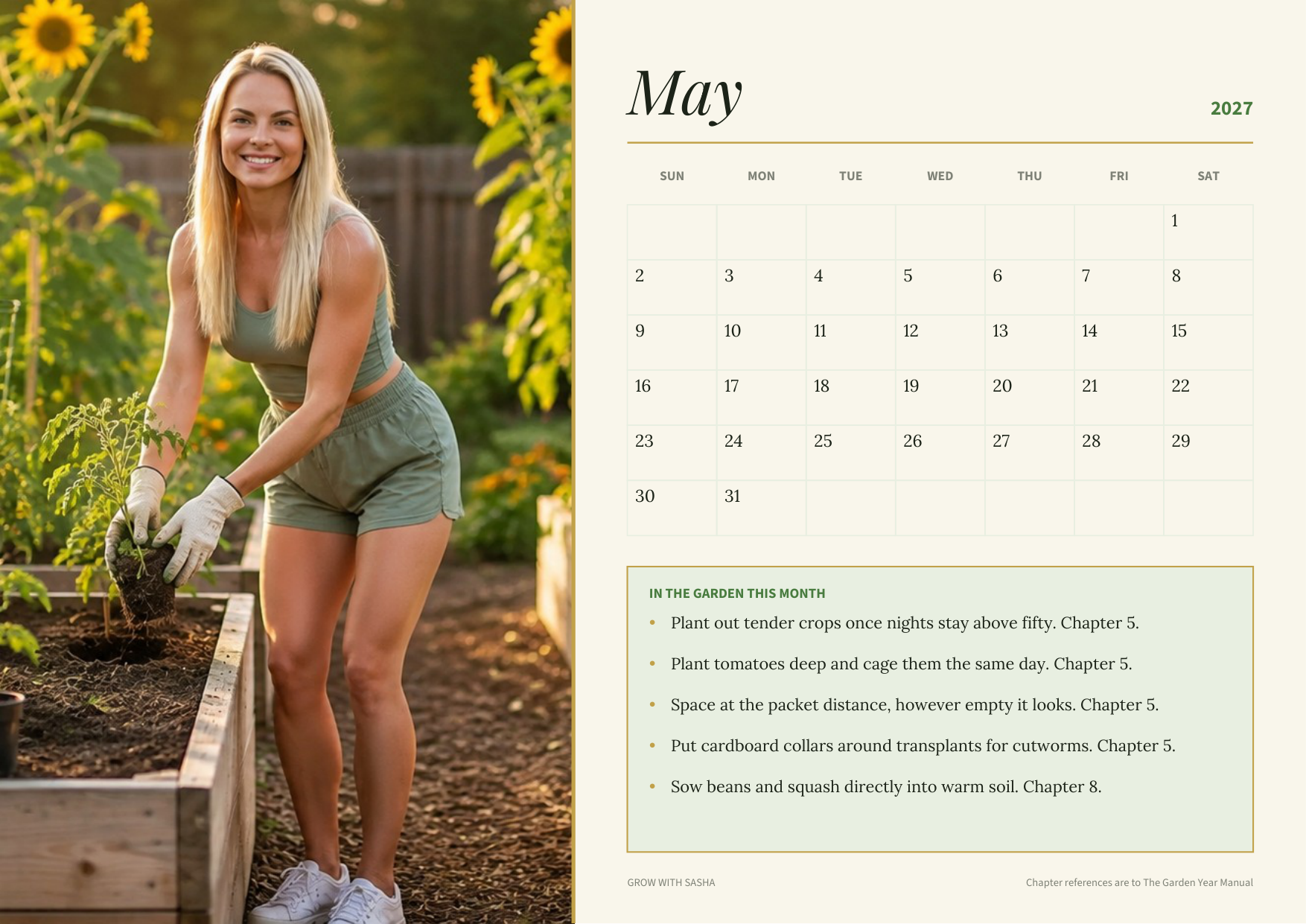
The manual tells you what to do. The calendar tells you when, which is the part beginners actually get wrong. Print it, hang it up, and the garden stops being something you remember too late.
$47 for the manual and the calendar together, against $37 for the manual on its own.
— Sasha
Read it for seven days. If it has not answered something you were stuck on, or it simply is not for you, write to me and I will refund every cent, no questions. Pay once and it is yours to keep, on your phone, your tablet, or printed at the kitchen table.

7-day refund · emailed instantly · PDF · yours forever
Visa · Mastercard · PayPal · Apple Pay · Delivered by email the moment you buy
It is written for exactly that. It assumes no knowledge and no equipment, and it starts before the seeds, with how to work out where the sun actually falls in your own yard. Every term is explained the first time it appears.
The methods do. The dates do not, and no book can fix that honestly. Timing depends on your frost dates and your season length, so the book teaches you to look those up once and count from them, and it points you at your own state extension service, which publishes free planting calendars for your county.
Yes. Containers, table-height pots and windowsill crops run right through it, and a whole chapter of herbs and cut-and-come-again salad needs no garden at all.
No, and this is the part most gardening books leave out. Chapter three is fifteen entries on bed height, how far you should have to reach, path width, long-handled tools, watering without carrying cans, and breaking the work into fifteen minute pieces.
A thirteen-page 2027 wall calendar. One photograph and a real date grid for each month, plus the five jobs worth doing that month, each pointing back to the chapter that explains it. It is a PDF you print at home.
None, deliberately. It is a gardening manual. It makes no claims about health, nutrition or money, and where a subject would touch either, it stops.
A 198-page PDF, emailed the moment you buy, plus the calendar PDF if you take that option. It reads on a phone, a tablet or a computer, and it is laid out to print at home. You pay once. Nothing renews.
Not as a printed book. It is a digital book you can print yourself, which is what keeps it at $37 instead of what a 198-page illustrated hardback would cost.
12 chapters on light, soil, a garden that fits your body, the growing year, the plants themselves, and what a sick leaf is telling you. 198 pages, 180 entries, a photograph on every one. $37, once.
Get both · $477-day refund · emailed instantly · PDF · manual on its own $37